If your toddler is hearing two languages at home and saying fewer words than other kids their age, you've probably been told to wait, to worry, or to drop one of the languages. Sometimes all three, by three different people. Here's the short answer I give families: learning two languages does not cause a speech delay.
Bilingual toddlers say their first words and start putting words together on the same general timeline as children who hear one language. What looks like a delay is often a counting problem. In this article I'll show you how to count words the right way, which bilingual habits are completely normal, why you should keep speaking your language, and the red flags that do deserve a closer look in any language.
Key takeaways
- Learning two languages doesn't cause a speech or language delay.
- Count your child's words in both languages together. Each language alone can look small.
- Mixing languages in one sentence is normal and is not a sign of confusion.
- Keep speaking the language you know best. Dropping it usually means less talk, not more.
- A real delay shows up in both languages. If you see red flags, ask for an evaluation that includes your child's home language.
On this page
Do bilingual toddlers talk later?
Not in any way that should worry you. Bilingual babies babble, say first words and start combining words on the same general schedule as other children. Some start talking a little later, but they still fall within the wide range of normal.
What research does show is that a bilingual child may know fewer words in each single language than a child who hears only that language. That makes sense. Their day is split between two languages, so each one gets part of the practice. But when you add both languages together, their total vocabulary grows at the same pace or faster (Hoff & Core, 2015).
So a bilingual toddler can look "behind" on an English-only checklist and be right on track. That's the most common mix-up I see, and it's why the next step matters so much.
Count words in both languages

Add the two lists together
When you check your child against how many words a child should have at each age, count every word they use in either language. If your 20-month-old says "agua," "ball," "mamá," "dog," "más" and "up," that's six words, not three.
Count a word pair as two
If your child knows the same thing in both languages, like "milk" and "leche," count both. Each one is a word they learned. Researchers do the same thing when they measure a bilingual child's vocabulary.
Ask the other adults
Grandparents, a nanny or a childcare teacher may hear words you don't. Jot down a quick list from everyone for a week. You'll often be surprised by the total.
Bilingual patterns that are normal
These are the things parents most often ask me about. None of them is a sign of a delay on its own.
Mixing languages in one sentence
"Quiero more juice" is a great sentence. Mixing languages, which experts call code-switching, is a normal part of growing up bilingual. Children often reach for the word they know best in the moment. It doesn't mean they're confused. Babies can tell their languages apart very early, and two languages don't confuse children (Hoff & Core, 2015). Bilingual adults mix languages too.
One stronger language
Most bilingual children have a stronger language, usually the one they hear most. That can shift, for example after a child starts an English-speaking daycare. A stronger and a weaker language is a sign of normal bilingual learning, not a problem.
A quiet period with a new language
When a child starts learning a second language later, like a 2-year-old who hears only Spanish at home and starts an English daycare, they often go quiet in the new language for a while. They're listening and understanding before they start talking. This "silent period" is expected (Children's Hospital Los Angeles). What matters is that they keep talking in their home language.
A note from clinical practice
When a family tells me their child "only talks at home," I ask what language home is. Very often the child is chatting away in one language and quiet in the other. That's a very different picture from a child who is quiet in both, and it changes my advice completely.
Should we stop speaking our home language?
No. This is the advice I most want parents to hear, because well-meaning relatives, teachers and even doctors still suggest it. Researchers who study bilingual children say immigrant parents should not be discouraged from speaking their native language with their children (Hoff & Core, 2015).
Here's why dropping your language usually backfires:
- Your child hears less language, not more. If you switch to a language you're less comfortable in, you'll likely talk less, use simpler words and tell fewer stories. Toddlers learn from rich, easy, everyday talk.
- Children learn well from fluent speakers. The language you speak most naturally gives your child the best model.
- Your child keeps their family connection. The home language is often how a child talks with grandparents and relatives. Losing it can cost a lot.
- It won't fix a real delay. If a child has a language disorder, it shows up in both languages. Removing one language doesn't make the disorder go away. Therapy does.
You don't need a strict system to raise a bilingual child. Some families use "one parent, one language," and others mix freely. What matters most is that your child hears plenty of each language from people who speak it comfortably, in real conversations during the day.
Red flags in any language
A true speech or language delay shows up across your child's languages, not just in one. These are the signs I'd want to look into, using the total of both languages. They match the milestones in our speech and language red flags by age.
| By this age | Talk to your doctor or an SLP if your child isn't yet |
|---|---|
| 9 to 12 months | Babbling with sounds like "bababa" or "mamama," in any language |
| 18 months | Saying at least three words besides "mama" or "dada," counting both languages |
| 2 years | Putting two words together, like "more milk" or "más agua," in either language or mixed |
| Any age | Understanding simple words and directions in at least one of their languages |
| Any age | Keeping words and skills they had. Any loss of words in either language needs a prompt check. |
Also pay attention if your child doesn't seem to understand you in the language you speak most, rarely gestures or points, or gets very frustrated when they can't get their message across. A quiet period in a brand-new language is normal. Being quiet in both languages is not.
Not sure if what you're seeing is a late start or something more? Read late talker vs speech delay and what is a late talker. The same signs apply to bilingual children, as long as you count both languages.
Getting an evaluation for a bilingual child
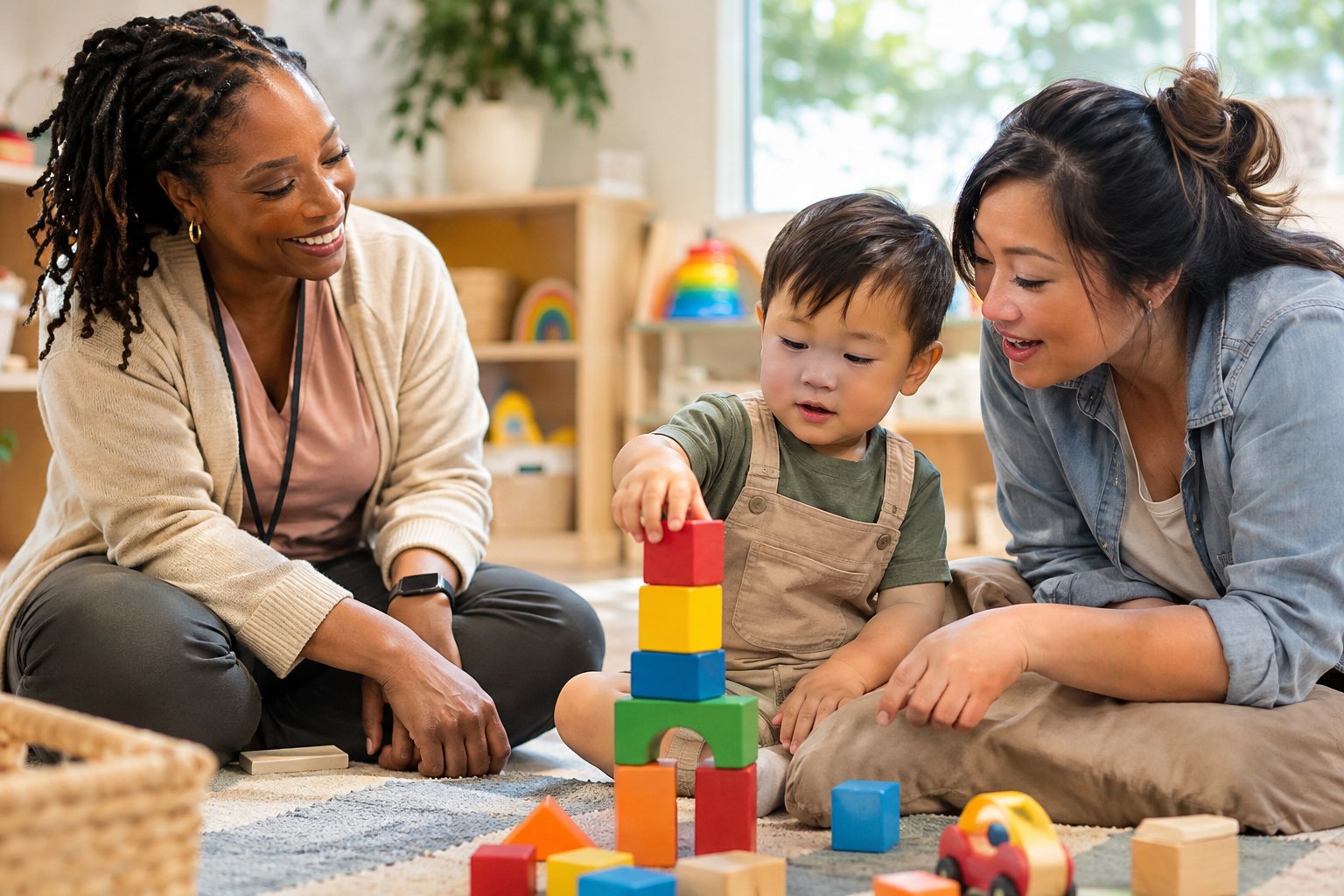
If you're worried, an evaluation gives you real answers instead of guesses. For a bilingual child, how it's done matters a lot. A test given only in English can make a typical bilingual child look delayed, or miss a real delay.
- Ask for testing in both languages. Federal law requires Early Intervention and school evaluations to be given in your child's native language unless that's clearly not feasible (34 CFR 303.321; 34 CFR 300.304).
- Ask about a bilingual SLP or an interpreter. If no therapist speaks your language, a trained interpreter can help the SLP see how your child talks in it.
- Bring your word list. Your list of words in both languages is one of the most useful things an evaluator can have.
- Under 3? It's free. Every state has free Early Intervention, and you can call yourself without a referral.
Our guide to a speech and language evaluation walks you through what happens during the visit.
A note from clinical practice
If your child does need therapy, it should support both of their languages. Therapy that pushes a child to give up their home language isn't the standard of care. A good SLP will work with the languages your family actually uses every day.
Building both languages at home
You don't need special materials. These simple habits help any toddler, in any language:
- Talk through your day. Name what you're doing while you cook, bathe and get dressed, in the language that feels natural.
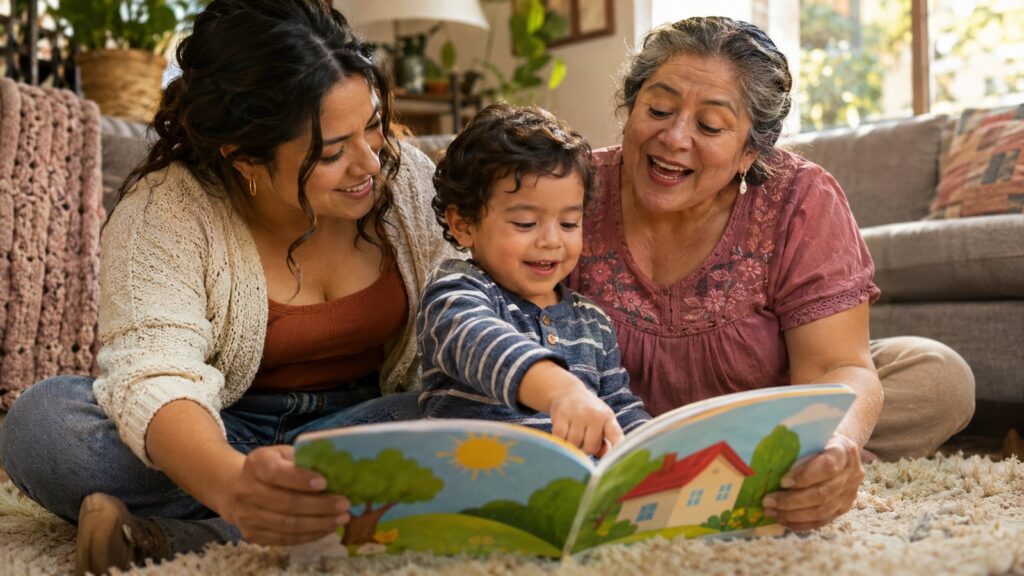
- Read together in both languages. Picture books in your home language count just as much. Libraries often have bilingual books.
- Sing songs and rhymes. Songs from your childhood are perfect. Repetition helps words stick.
- Follow your child's lead. Talk about what they're looking at or playing with, and pause so they have a chance to answer.
- Give each language real time. Video calls with grandparents, playgroups and community events give your child more chances to hear and use the home language.
- Don't correct the mixing. If your child mixes languages, just repeat back the full idea naturally, in your language.
Frequently asked questions
Will learning two languages confuse my toddler?
No. Babies can tell languages apart very early, and growing up with two languages doesn't confuse children. Mixing languages is a normal stage, not a sign of confusion.
Is it a problem that my child mixes languages?
No. Code-switching is normal for bilingual children and adults. Children often use the word that comes to mind first, from whichever language has it.
My pediatrician said to speak only English. Should I?
Keep speaking the language you know best. Dropping your home language usually means your child hears less language overall, and it won't fix a real delay. If you're worried about your child's speech, ask for a speech and language evaluation that includes both languages.
Do bilingual children need speech therapy more often?
No. Being bilingual doesn't make a speech or language disorder more likely. The bigger risk is a mistake in testing, where a normal bilingual child is tested in only one language and looks delayed, or a real delay gets blamed on bilingualism and missed.
What if we speak three languages at home?
The same rules apply. Count words in all of your child's languages together, expect one language to be stronger, and keep speaking the languages you're comfortable in. Watch for the same red flags across all of them.
Should I wait until my child is older to add a second language?
There's no need to wait. Young children can learn two languages from birth. If you're worried about your child's speech right now, that's a reason to get an evaluation, not a reason to drop a language.
Not sure where your child falls?
Our free speech screener takes under 3 minutes and needs no sign-up. Count words in both languages when you answer, and it'll tell you whether your child's communication looks on track or is worth discussing with an SLP.
Sources: Hoff E, Core C. What Clinicians Need to Know about Bilingual Development in Children. Seminars in Speech and Language, 2015; Children's Hospital Los Angeles, Debunking Myths About Bilingual Language Acquisition; 34 CFR 300.304; 34 CFR 303.321; CDC milestone checklists.