
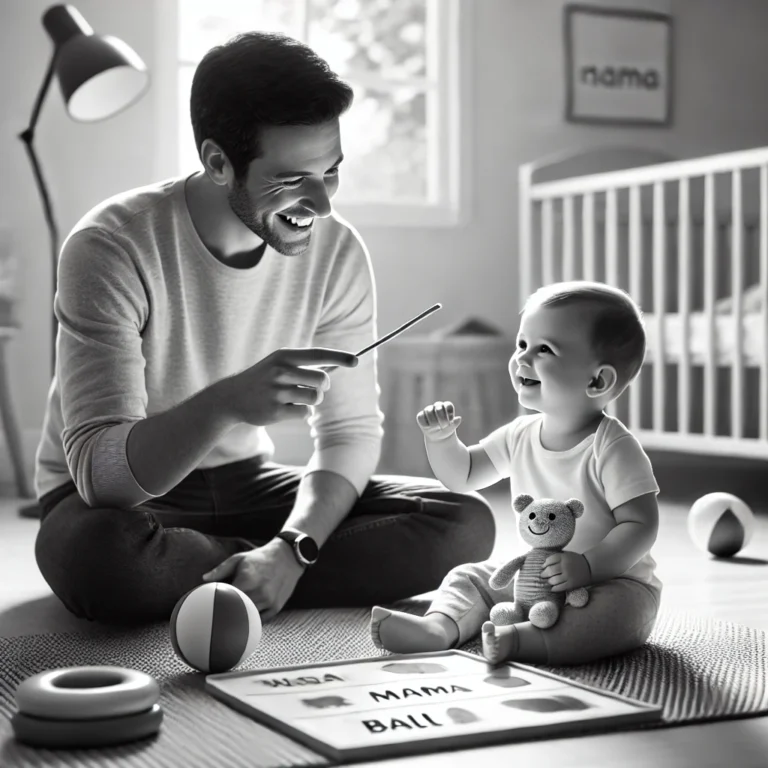
Babies First Words: What to Expect and How to Help
Introduction to Babies First Words
Babies first words are an exciting milestone—but they can also raise questions for parents.
Most babies say their first meaningful words between 10 and 14 months, although a wide range of development is normal. Early words such as mama, dada, ball, and bye-bye signal that a child is beginning to understand and use language to connect with the world.
In this guide, an experienced speech-language pathologist explains what babies first words usually are, when they appear, and how parents can gently encourage early speech development using play-based, research-supported strategies. If you have concerns about delayed first words, you may also want to explore common speech and language disorders and learn when extra support can help.
Quick Answer: Baby’s First Words
Most babies say their first meaningful words between 10 and 14 months, though some may start earlier or later. Common first words include mama, dada, ball, dog, and bye-bye. Understanding words usually comes before spoken words, and development can vary widely.
Understanding Babies First Words
Table of Contents
Why First Words Matter
First words are more than just simple vocalizations; they signify significant aspects of a baby’s growth and development:
- Indicates Cognitive Development: Early speech reflects a baby’s growing understanding of their environment and their ability to process and use language.
- Shows Social Understanding: Speaking helps babies engage socially, facilitating interactions with parents, siblings, and peers.
- Marks the Beginning of Verbal Communication: First words lay the groundwork for more complex language skills and communication abilities.
- Provides Insight into Comprehension Skills: The words a baby chooses often relate to objects and people they recognize and understand.
- Forms the Foundation for Future Language Development: Early vocabulary is a predictor of later language proficiency and academic success.
The Science Behind First Words
Recent research from the American Academy of Pediatrics (2025) shows that early verbal development strongly correlates with future academic and social success. Pediatric speech pathologists emphasize that the first words are not just about vocabulary acquisition but also about building cognitive and social skills. Engaging with your baby through conversation, reading, and interactive play can significantly enhance their language development.
Development Timeline
Pre-Speech Milestones
Understanding the typical timeline for speech development helps parents recognize when their child is on track or might need additional support.
| Age Range | Expected Development | Signs to Watch For |
|---|---|---|
| 0-3 months | Cooing, pleasure sounds | Responds to voices |
| 4-6 months | Basic babbling | Makes “ba,” “ma” sounds |
| 7-9 months | Advanced babbling | Copies sounds |
| 10-12 months | Speech-like sounds | Uses gestures |
For a broader overview of early communication skills, see our guide to child speech and language developmental milestones.
Key Speech Development Stages
Early Stage (10-14 months)
- First meaningful words emerge
- Recognition of common objects
- Basic name recognition
- Simple command understanding
Growth Stage (15-18 months)
- Vocabulary expands to 10-15 words
- Combines sounds with gestures
- Understands simple instructions
- Shows interest in conversations
Typical Milestones for Speech Development
- 0-6 Months: Cooing and making vowel sounds like “oo” and “aa.”
- 6-12 Months: Babbling and combining consonants and vowels, such as “baba.”
- 12-18 Months: Saying first words like “mama” and “dada.”
Press Here to learn more about child developmental milestones.
Common First Words List
While every child is different, research and clinical experience show that certain words appear more often as babies begin to speak.
- Mama (65%)
- Dada (62%)
- Ball (45%)
- Bye-bye (42%)
- Dog/Woof (40%)
- Apple (38%)
- Cookie (35%)
- Milk (33%)
- Juice (30%)
- Book (28%)
- Cat (25%)
- Chair (23%)
- Bed (20%)
- Spoon (18%)
- Potty (15%)
Detailed Explanation of Each Common First Word
- Mama & Dada: These are typically the first words because they refer to primary caregivers.
- Ball & Dog: Common household objects and pets are often among the first words due to their frequent presence.
- Bye-bye: Simple and repetitive, making it easy for babies to mimic.
- Apple & Cookie: Familiar foods that babies encounter regularly.
- Milk & Juice: Essential for daily routines, reinforcing the word through association.
- Book & Cat: Items and animals that babies see and interact with regularly.
- Chair & Bed: Common furniture items in a baby’s environment.
- Spoon & Potty: Items related to daily activities and routines.
Play First Word Matching
Interactive Word Matching Games
Engaging your baby in interactive word matching games can significantly boost their language development. These games involve matching words with corresponding images or objects, reinforcing vocabulary through play. For example, the Word Matching Game on our site includes 24 common first words that babies can learn in a fun and engaging way.
Benefits of Play-Based Learning:
- Enhances Vocabulary: Repeating and matching words help solidify their meanings.
- Promotes Cognitive Skills: Sorting and matching require cognitive processing.
- Encourages Engagement: Interactive play keeps babies interested and motivated to learn.
Meet the First Word Detectives
The First Word Detectives on a Mission for New Words!
Introducing our lovable detectives Maya, Jayden, and Leo! These young explorers embark on exciting word hunts in different rooms of their homes, uncovering new words and enhancing their language skills through playful adventures. Dive into their stories and see how they discover words in everyday settings:
- Jayden’s Kitchen Word Hunt ☕ 🥄 🍎
- Maya’s Patio Word Hunt 🍌 🍪 🥛
- Leo’s Dining Room Word Hunt 🧃 🪑 🍴 🍎
- Jayden’s Bedroom Word Hunt 🛏️ 🎩 👟
- Maya’s Backyard Word Hunt 🐶 🐦 🌳
- Leo’s Playroom Word Hunt ⚽ 🚂 🧩
- Maya’s Living Room Word Hunt 📖 🪆 🐱
- Bathroom Word Hunt 🐤 🛁 🚽
Explore each detective’s adventure and discover practical ways to encourage your own child’s speech development through fun and engaging activities.
Encouraging Speech Development
Research-Backed Strategies
Implementing effective strategies can accelerate your baby’s language development. Here are some research-backed methods:
- Interactive Communication: Maintain eye contact, respond to babbling, and use clear, simple language.
- Responsive Communication Techniques: Listen and respond to your baby’s attempts at communication, fostering a supportive environment.
Daily Learning Opportunities
Incorporate learning into daily routines to create a language-rich environment:
- Naming Objects: During activities like dressing or eating, name the objects your baby interacts with.
- Reading Together: Choose picture books with repetitive text and simple illustrations.
- Singing Songs: Nursery rhymes and simple songs reinforce language patterns and vocabulary.
Social Interaction and Peer Play
Encouraging social interactions with other children can boost language skills:
- Playdates: Provide opportunities for your baby to observe and imitate peers.
- Group Activities: Engaging in group play fosters communication and social skills.
Play-Based Learning and Language Development
Play is a critical component of early language development. Interactive toys, role-playing games, and imaginative activities stimulate speech by encouraging babies to describe actions and objects.
Examples of Play-Based Learning:
- Toys: Puzzles, shape sorters, and pretend playsets.
- Role-Playing: Using toys like toy kitchens to learn words like “cook,” “eat,” and “plate.”
Case Studies: Real-Life Examples of Language Development
Many of these strategies are also used in speech therapy for toddlers to support early language growth.
Case Study 1: Ethan’s Journey to Speaking
Sarah noticed her son, Ethan, wasn’t saying words as quickly as other toddlers his age. By 18 months, he had only said “mama” and “dada.” After consulting a speech therapist, Sarah implemented interactive reading and role-playing games. Within two months, Ethan had added five more words to his vocabulary. This case demonstrates how targeted activities and professional guidance can significantly impact language development.
Case Study 2: Navigating Bilingual First Words
Sarah and Miguel, parents of a bilingual baby, successfully navigated the complexities of first word development in both English and Spanish. By consistently using both languages in daily interactions and reading bilingual books, their daughter began speaking her first words by 11 months, seamlessly integrating vocabulary from both languages. This case highlights the importance of consistent exposure and the benefits of a supportive multilingual environment.
Case Study 3: Addressing Speech Delays
Emily’s parents were concerned when she wasn’t babbling by 9 months. After a thorough evaluation, a speech therapist identified mild speech delays. Through a combination of speech therapy sessions and home-based interactive activities, Emily began to babble and say her first words by 10 months. This case underscores the value of early intervention and consistent practice in overcoming speech delays.
Warning Signs and When to Seek Help
Red Flags for Speech Delay
Monitor your babies development and consult a healthcare provider if you notice:
- No Babbling by 9 Months
- No First Words by 18 Months
- Limited Sound Variety
- Poor Response to Sounds
- Lack of Communicative Gestures
Steps to Take if You’re Concerned
If you observe any of the red flags, seek professional guidance promptly. Early intervention can make a significant difference in addressing speech delays and supporting your child’s language development.
Expert Tips and Strategies
Insights from Speech Therapists and Psychologists
Dr. Michael Chen, a developmental psychologist, recommends: “The key to encouraging a baby’s first words is creating a language-rich environment through natural, daily interactions. Parents should focus on responsive communication rather than pushing for specific words.”
Practical Strategies for Parents and Caregivers
- Follow Your Child’s Lead: Engage with your child’s interests and build vocabulary around those areas. If your child is fascinated by animals, introduce words like “dog,” “cat,” and “bird.”
- Repeat and Expand: When your child says a word, repeat it and add more context to reinforce its meaning. For example, if your child says “ball,” you can say, “Yes, a red ball!”
- Create Opportunities for Communication: Encourage your child to use words by placing objects slightly out of reach and prompting them to ask for help. For instance, “Do you want the ball?”
Frequently Asked Questions
When Do Babies Typically Say Their First Words?
Most babies begin saying their first words between 10 and 14 months. However, the range for normal development can vary from 9 to 18 months, depending on individual factors and environment.
What Are Usually the First Words Babies Say?
Common first words typically include “mama,” “dada,” and names of familiar objects or animals. These words often relate to important people and things in the baby’s daily life.
How Can I Encourage My Baby to Say Their First Words?
Engage in regular conversations, read together, sing songs, and use interactive games to create a language-rich environment. Consistent interaction and responsive communication are key.
Are There Differences in First Words Across Cultures?
Yes, different cultures may prioritize different words based on daily interactions and environment. Cultural practices and the emphasis on specific types of communication can influence the order and types of first words.
When Should I Seek Professional Help for My Baby’s Speech Development?
If your baby is not babbling by 9 months or hasn’t said any first words by 18 months, consult a healthcare provider. Early intervention can help address potential speech delays effectively.
How Can Screen Time Affect My Baby’s Language Development?
Excessive screen time can hinder language development as it may reduce the time babies spend interacting with caregivers, which is crucial for learning language. Experts recommend limiting screen time and focusing on interactive, real-world communication to support your baby’s language skills.
Cultural Considerations
Impact of Different Cultures on First Words
Different cultures may experience variations in the order and types of first words. Cultural emphasis on specific interactions and daily routines can influence which words babies learn first. For example, in some cultures, words related to family members and food might emerge earlier, while in others, words related to nature or daily activities might be prioritized.
Multilingual Development Patterns
In multilingual households, babies might develop first words in multiple languages simultaneously. This can slightly extend the timeline but ultimately leads to greater language proficiency. Consistent exposure to each language through daily interactions, reading, and singing helps babies navigate and integrate multiple languages effectively.
Resources and References
Professional Organizations
- American Academy of Pediatrics
- American Speech-Language-Hearing Association
- National Institute of Child Health and Human Development
Recommended Reading and Tools
- Books: “The Whole-Brain Child” by Daniel J. Siegel and Tina Payne Bryson
- Articles: Recent studies on early language development from reputable journals
- Interactive Tools: Online word matching games and language development trackers
Conclusion
Every child’s language journey is unique. Celebrate each new word and cherish these early moments as your child learns to communicate. With patience and encouragement, you’ll help them build a strong foundation for their future language skills. Remember, regular interaction, reading, singing, and social play are essential tools in fostering early language development.
By following these strategies, parents and speech therapists can create a supportive environment that encourages children to express themselves through words. With the right approach, your child’s first words can pave the way for a lifetime of communication.
What Comes After First Words?
Once babies begin using single words, the next stage of speech development involves learning action words and combining words through everyday play and routines. Supporting this stage early helps children move from single words to short phrases with confidence.
Learn how early action words (verbs) support your child’s transition from single words to early sentences.
Free First Words Guide
Want a simple guide you can save or print?
Download our free Top 20 Babies First Words guide, written by a speech-language pathologist.
This free guide is designed to support parents during the first stages of speech development and can be used alongside everyday play and routines.
Every child develops at their own pace, and early language grows best through connection, repetition, and play.