
Speech Delay at 18 Months: Signs, Causes, and When to Seek Help
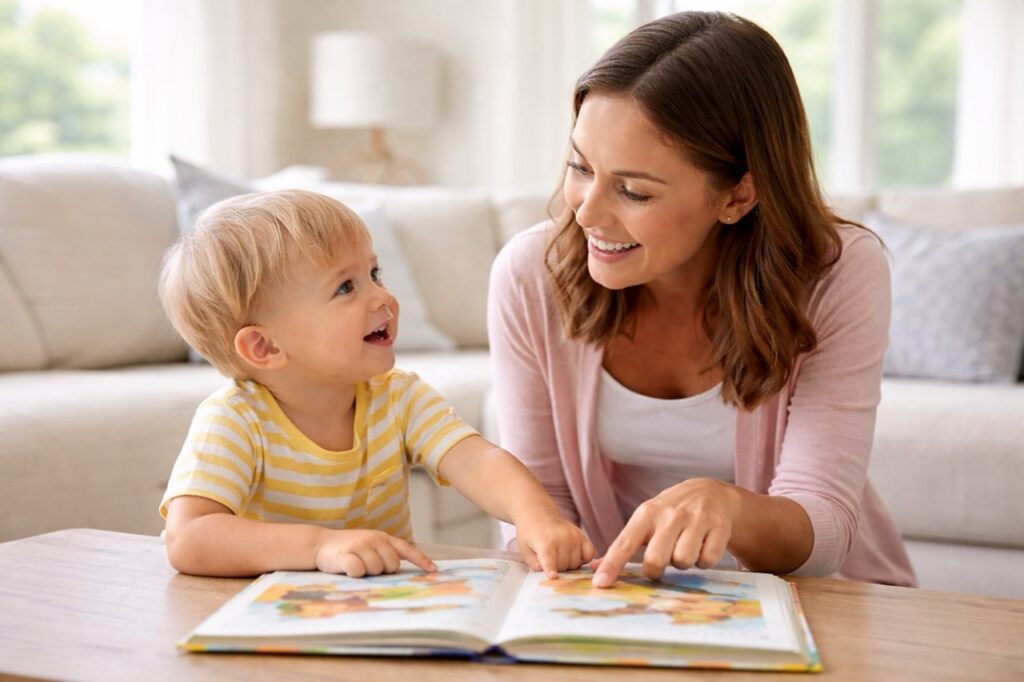
If you are worried about speech delay at 18 months, you are not alone. This is one of the most common ages when parents begin to wonder whether their toddler is talking enough. Some children chatter early. Others say only a few words. That wide range can make it hard to know when to relax and when to look more closely.
At 18 months, many toddlers understand more than they can say. That is normal. Receptive language, or understanding, often develops ahead of expressive language, or spoken words. Still, by this age, most children are beginning to use words in meaningful ways. If spoken language seems limited, it is reasonable to ask questions.
The goal is not to panic. The goal is to notice patterns early, support communication at home, and know when an evaluation may be helpful. Early support can make a real difference, especially during the toddler years when language is growing quickly.
What Is Typical Speech at 18 Months?
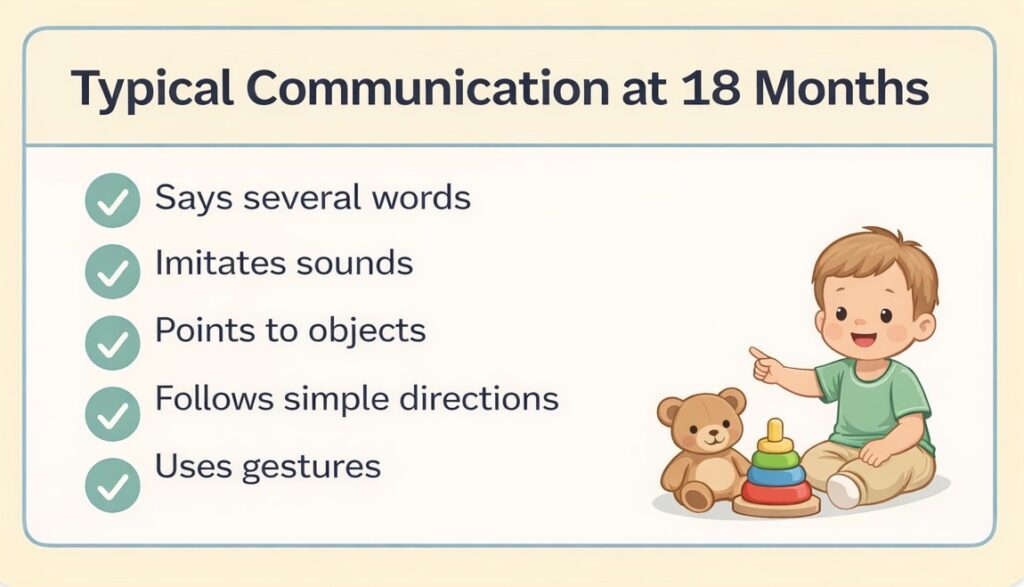
By 18 months, many toddlers:
- Say at least a few clear words
- Try to imitate new words
- Point to people, objects, or pictures
- Understand simple directions
- Use gestures along with sounds or words
- Show interest in communicating needs
Some toddlers say 10 words. Some say more. Some are just beginning to use words consistently. Development is not perfectly even from child to child. However, most 18-month-olds are showing clear signs that speech and language are moving forward.
If you want a broader picture of development, review speech and language milestones by age to compare what is expected during the toddler years.
When Should Parents Worry About Speech Delay at 18 Months?
A child does not need to be talking in full sentences at 18 months. That is not the expectation. Still, there are signs that deserve attention.
You may want to look more closely if your toddler:
- Says very few words or no clear words
- Rarely tries to imitate sounds or words
- Does not point to show interest
- Seems frustrated but cannot express wants clearly
- Does not respond consistently to simple directions
- Has lost words or communication skills once used
Sometimes parents notice that their child is bright, active, playful, and affectionate, but speech just is not coming along. That can still be worth evaluating. A child can be strong in many areas and still need help with communication.
Understanding More Than Talking
One reason this stage can be confusing is that many toddlers understand a great deal before they speak very much. A child may follow directions, bring a shoe when asked, look toward a favorite toy, or point to a picture in a book. That understanding is a very good sign.
Still, understanding alone does not always mean speech will catch up quickly. Some children are simply late talkers. Others have an developmental language delay that affects how spoken language develops over time.
If your child is close to age two and understands well but says very little, you may also want to read 2 year old not talking but understands for the next step in this age-based cluster.
Common Reasons for Speech Delay at 18 Months
There is no single reason why a toddler may be talking less than expected. Several possibilities can affect speech and language growth.
Hearing difficulties
Even mild hearing issues can make it harder for a toddler to learn and use words clearly. If speech is delayed, hearing should always be considered.
Family history
Some children have a family history of late talking, speech delay, or language disorders.
Expressive language delay
A child may understand well but have difficulty turning ideas into spoken words.
Developmental language delay
Some toddlers show delays in both understanding and speaking, while others show stronger understanding than expression.
Limited opportunities for back-and-forth interaction
Busy routines, heavy screen exposure, or fewer face-to-face exchanges may reduce chances to practice communication.
Autism or broader developmental concerns
Speech delay alone does not mean autism. However, if delayed speech appears along with reduced eye contact, limited social engagement, or repetitive behaviors, a fuller developmental evaluation may be recommended.
You can read more about Late Talker vs Autism: What’s the Difference? if that question is on your mind.
Will My 18 Month Old Catch Up?
This is often the first question parents ask, and it makes sense.
Some toddlers with delayed speech do catch up. Others need support. The difficult part is that it is not always easy to predict which child will catch up naturally and which child will continue to struggle.
That is why early attention matters. Seeking help does not mean you are overreacting. It means you are being thoughtful. A speech-language evaluation can provide clarity, practical guidance, and peace of mind.
The toddler years move quickly. Waiting too long can mean missing valuable months when language growth is especially active.
What Parents Can Do at Home
There is a great deal you can do at home to encourage speech in a natural way. The best strategies are simple, warm, and easy to repeat.
Follow your child’s lead
Talk about what your toddler is already looking at, touching, or enjoying. Shared attention is powerful.
Use short, clear phrases
Instead of long explanations, use short models like “more juice,” “big ball,” or “doggie running.”
Repeat key words often
Toddlers learn through hearing the same words many times in meaningful situations.
Expand what your child says
If your toddler says “ball,” you can say “big ball” or “throw ball.”
Read picture books every day
Simple books with familiar objects are excellent for building vocabulary.
Pause and wait
Give your child time to respond with a sound, gesture, or word. That pause invites communication.
Reduce background noise
Too much television or device sound can compete with face-to-face language learning.
Many families are surprised by how much progress can begin when everyday routines become language opportunities.
What Speech Therapy Looks Like at 18 Months
f you want a fuller picture of how therapy works during the toddler years, you can learn more about speech therapy for toddlers (0–3): signs, help & what to expect.
A speech-language pathologist may help by:
- Observing how your child communicates during play
- Looking at understanding, gestures, imitation, and spoken words
- Teaching you ways to model and expand language at home
- Building early vocabulary during routines like snack, bath, play, and books
- Encouraging interaction that feels natural rather than forced
This approach is usually most effective when parents are involved. At this age, progress often comes through coaching, repetition, and daily use of strategies at home.
You can learn more about Speech Therapy for Toddlers (0–3): Signs, Help & What to Expect if you want a full picture of how early therapy works.
When to Seek an Evaluation
You do not have to wait until age two or three to ask questions. An evaluation may be a smart next step if your child:
- Says no clear words or very few words at 18 months
- Shows limited attempts to imitate
- Struggles to communicate wants and needs
- Does not point or gesture much
- Seems to understand less than expected
- Has plateaued or lost skills
An evaluation does not commit you to long-term therapy. It simply gives you a clearer picture of where your child stands.
In many areas, children under age three may qualify for Early Intervention Speech Therapy services. These programs can offer support at a very important stage of development.
If you are ready for the next step, you can find a speech therapist near you and explore local or teletherapy options.
Signs of Progress to Look For
Even small gains matter at this age. Encouraging signs include:
- More attempts to imitate sounds
- New gestures such as pointing or waving
- Increased attention to words in routines
- More consistent response to directions
- New single words appearing over time
- Less frustration during communication
Progress is not always dramatic at first. Sometimes it begins with more interest, more imitation, and more back-and-forth interaction. Those are important building blocks.
What Not to Do
When parents are worried, it is natural to want to push hard. But too much pressure can make communication harder.
Try not to:
- Constantly test your child
- Demand “say it” over and over
- Compare your child to every other toddler
- Assume the delay will definitely disappear on its own
- Wait many months if your instincts say something is off
A calm, steady approach works better than pressure. Support should feel encouraging, not stressful.
Frequently Asked Questions
How many words should an 18 month old say?
Many 18-month-olds say several words and try to imitate new ones. Some say more than others, but most show clear signs that speech is developing.
Is it normal for an 18 month old not to talk much?
It can be within the wide range of normal for some toddlers to say fewer words, especially if understanding is strong. Still, limited speech at 18 months should be watched closely.
Should I wait until age two?
Not necessarily. If you are concerned now, it is reasonable to ask for guidance now. Early support is often easier and more effective than waiting.
What if my child understands everything but does not say much?
That may point to a gap between receptive and expressive language. Strong understanding is encouraging, but limited speech can still deserve evaluation.
Final Thoughts
Worrying about speech delay at 18 months does not mean you are overreacting. It means you are paying attention. That matters.
Some toddlers need a little more time. Some need extra support. The key is to notice whether communication is growing, whether your child is trying to connect, and whether spoken language is beginning to emerge in meaningful ways.
If something feels off, trust that feeling. Ask questions. Look early. Support communication in everyday routines. And remember that many children make strong gains when concerns are recognized early and the right help is put in place.
If you would like professional guidance, you can also find a speech therapist near you who specializes in early childhood communication.