
How the Brain Processes Music and Supports Speech Development
Music is far more than entertainment. When a person listens to a song, multiple regions of the brain become active at the same time. Scientists have discovered that music engages areas responsible for hearing, movement, emotion, memory, and language.
Because of this widespread brain activity, music often plays an important role in communication development. In speech therapy settings, rhythm and melody are frequently used to support language learning and speech production.
Understanding how the brain processes music helps explain why musical activities can strengthen communication skills in both children and adults.
The Auditory Cortex: Where Music Begins
Music first enters the brain through the auditory cortex, located in the temporal lobes.
This region analyzes the basic components of sound such as:
• pitch
• rhythm
• loudness
• tone quality
The auditory cortex helps the brain identify patterns in sound. These patterns allow a listener to recognize melodies and distinguish between instruments and voices.
Speech also relies on sound patterns. For this reason, rhythmic songs can help the brain organize speech sounds and improve listening skills.
Rhythm Activates the Motor System
Music does not stay only in the hearing centers of the brain. Rhythm quickly spreads to areas that control movement.
These include:
• the motor cortex
• the basal ganglia
• the cerebellum
This is why people naturally respond to music by tapping their feet, clapping, or swaying to a beat.
Speech production also requires precise coordination of movement. Breathing, voice, and mouth movements must work together in a carefully timed sequence. Rhythm helps the brain organize these movements, which is why rhythmic activities are often used in speech therapy.
Melody and Memory Connections
Melody strongly activates the brain’s memory systems, particularly the hippocampus.
Songs create structured patterns that the brain can easily store and retrieve. This explains why many people can remember song lyrics years after hearing them.
For language learning, melody helps reinforce:
• vocabulary
• sentence patterns
• conversational rhythm
Children often imitate words more easily when those words appear within songs.
Emotional Centers of the Brain Respond to Music
Music also stimulates the limbic system, which is responsible for emotion and motivation.
Structures such as the amygdala become active when music triggers emotional responses. These emotional reactions increase attention and engagement.
When learners are emotionally involved, they are more likely to participate and remember information. In communication therapy, music often helps create an enjoyable environment that encourages interaction.
Brain Areas Involved in Music Processing
When listening to music, several important brain regions work together.
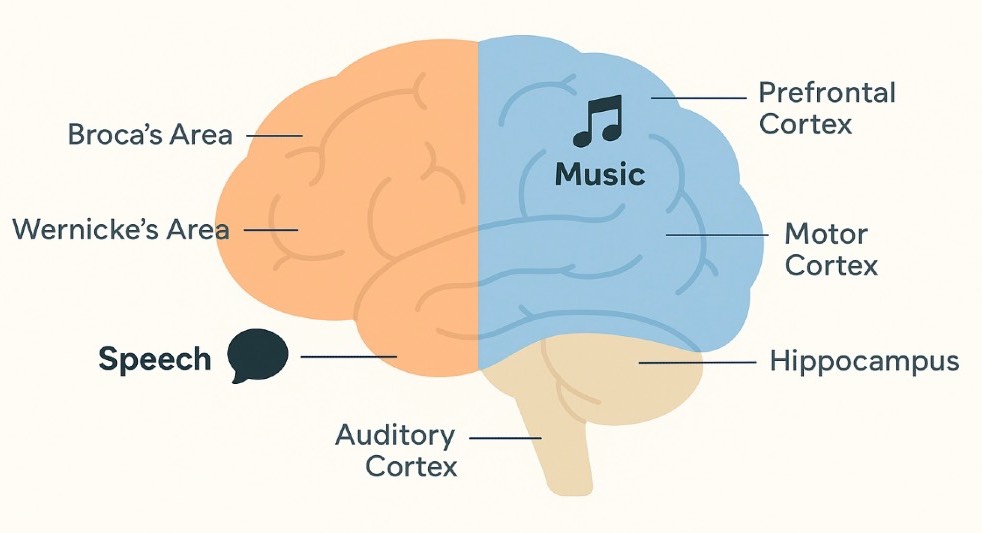
(Insert your brain diagram image here)
Key areas involved include:
Auditory Cortex
Processes pitch, tone, and rhythm.
Motor Cortex
Coordinates movement and timing.
Cerebellum
Supports rhythm perception and coordination.
Basal Ganglia
Helps regulate movement patterns and rhythmic timing.
Hippocampus
Supports memory for melodies and lyrics.
Limbic System
Creates emotional responses to music.
Together these regions explain why music can influence movement, emotion, memory, and communication simultaneously.
Music and Language Share Brain Networks
Research shows that music and language share several brain pathways. Regions involved in speech production and comprehension also respond to musical patterns.
Both music and language rely on:
• timing
• rhythm
• phrasing
• sound pattern recognition
Because these systems overlap, musical activities can reinforce speech and language learning.
This connection helps explain why rhythm and melody are often effective tools in communication therapy.
Music vs Speech: How the Brain Processes Both
Music and speech share many neurological pathways, but they also have important differences.
Music Processing
• Strongly activates rhythm and emotional centers
• Engages motor timing networks
• Uses melody and pitch patterns
Speech Processing
• Relies more heavily on language areas such as Broca’s and Wernicke’s regions
• Focuses on word meaning and grammar
• Requires precise articulation movements
Despite these differences, both systems rely on auditory processing, timing, and pattern recognition. Because of this overlap, music can often strengthen the skills needed for speech and language development.
Why Music Supports Speech Development
Music activates many brain systems simultaneously. This broad activation strengthens neural connections involved in communication.
Music engages:
• hearing
• movement
• emotion
• memory
• language processing
Few activities stimulate so many communication-related systems at the same time.
For children learning to speak, music helps develop foundational skills such as imitation, attention, and turn-taking.
Music and the Developing Brain
Infants and toddlers respond strongly to rhythm and melody. Long before children speak their first words, they often respond to music through movement, vocal play, and attention.
Music encourages early communication behaviors including:
• joint attention
• sound imitation
• vocal experimentation
• social interaction
These early abilities form the foundation for speech and language development.
How Music Is Used in Speech Therapy
Speech-language pathologists often incorporate music into therapy activities.
Common approaches include:
Action Songs
Songs with gestures help connect movement and language.
Rhythm Activities
Clapping or tapping syllables improves speech timing.
Repetitive Songs
Predictable lyrics reinforce vocabulary learning.
Pause-and-Fill Songs
Stopping before the last word encourages speech attempts.
These strategies work because they align with how the brain naturally processes sound patterns.
Learn more:
Explore the full guide to Music and Early Speech Development to see how musical activities support early communication.
FAQ: How the Brain Processes Music
How does the brain process music?
The brain processes music through a network of regions responsible for hearing, movement, emotion, and memory. The auditory cortex analyzes sound patterns, while motor and emotional centers respond to rhythm and melody.
Why does music help speech development?
Music strengthens auditory processing, rhythm perception, and memory. These skills are important for producing speech sounds and learning language patterns.
What part of the brain responds to rhythm?
Rhythm activates the motor cortex, cerebellum, and basal ganglia. These areas help coordinate timing and movement, which are essential for speech production.
Can music help children learn language?
Yes. Songs contain repetition, rhythm, and predictable phrasing. These patterns make it easier for children to remember words and imitate speech.
Why do people remember songs so easily?
Songs are easier to remember because melody and rhythm activate the brain’s memory systems, particularly the hippocampus.