
AAC for Autism: How Augmentative and Alternative Communication Supports Language
Augmentative and alternative communication (AAC) supports children and adults with autism who experience challenges with spoken language, expressive communication, or social interaction. AAC provides reliable ways to communicate that reduce frustration, support understanding, and increase meaningful participation in daily life.
Used as part of speech therapy, AAC may supplement spoken language or serve as a primary communication method. This guide explains how AAC supports individuals with autism, when it should be introduced, common AAC tools used in therapy, and how speech-language pathologists help families implement AAC successfully.
Table of Contents
What Is AAC for Autism?
AAC for autism includes tools and strategies that support or replace spoken language when speech is limited, inconsistent, or difficult to understand. AAC may be used alongside speech or independently, depending on the individual’s communication profile.
AAC systems can include:
- Pictures and symbols
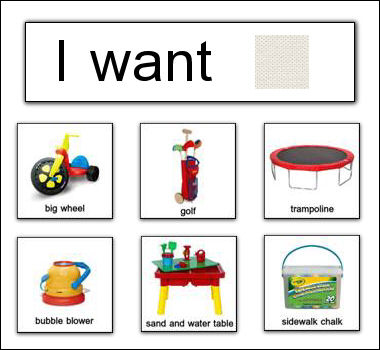
- Communication boards or books
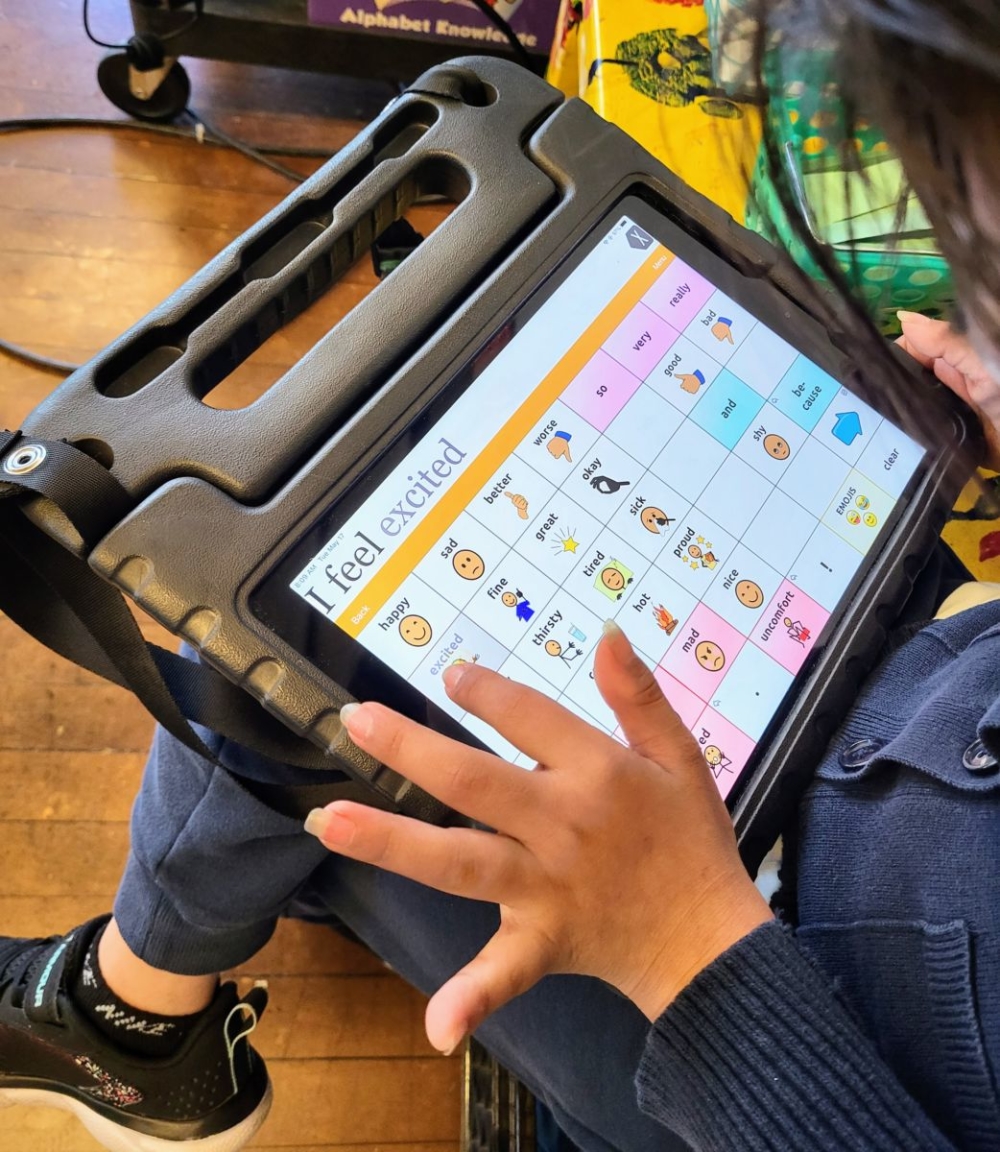
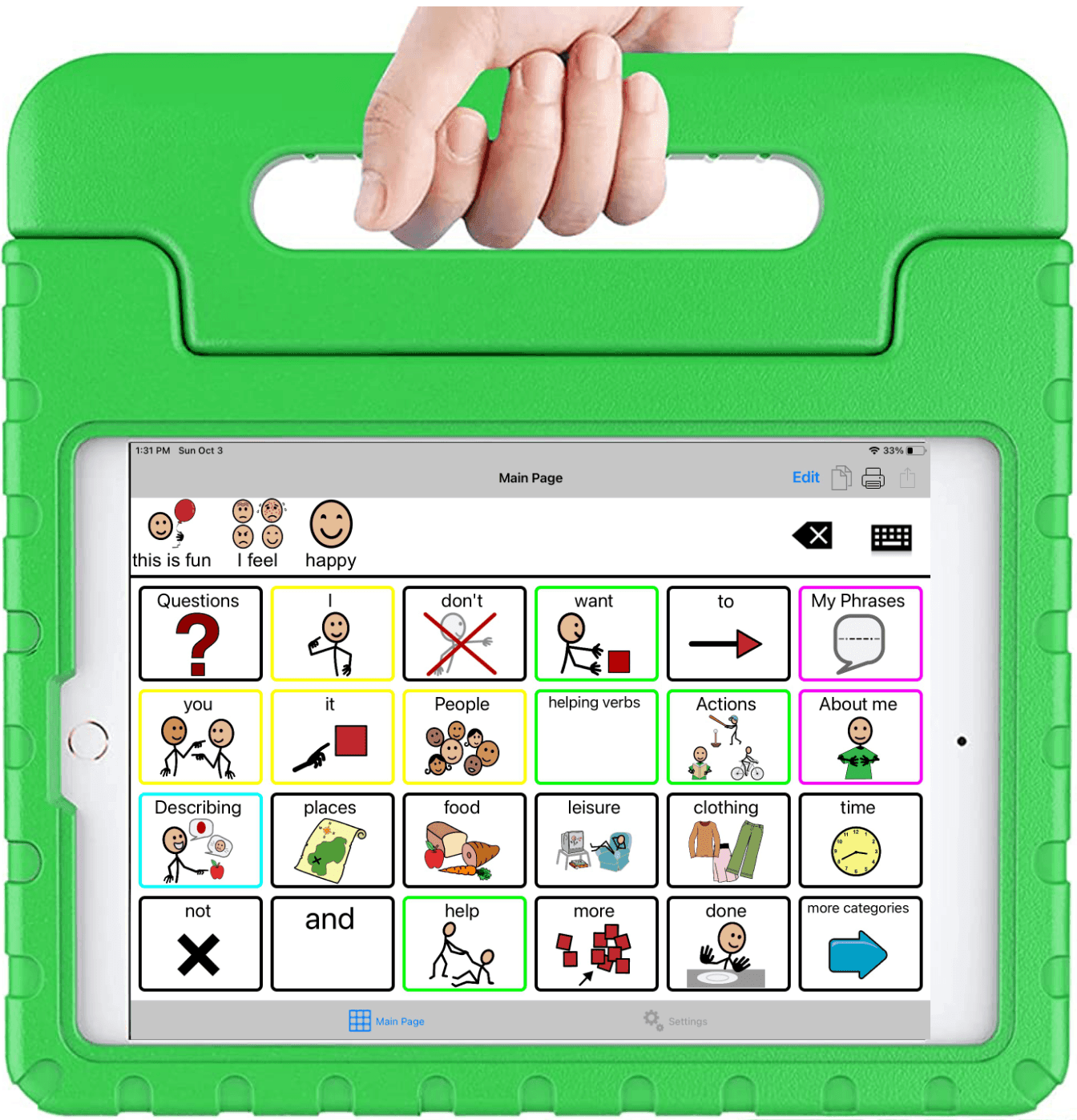
- Tablet-based AAC apps
- Speech-generating devices
AAC does not prevent speech development. Research consistently shows that AAC supports communication while language skills continue to grow.
Why AAC Is Effective for Individuals with Autism
Many individuals with autism understand language but struggle to express themselves verbally. AAC helps bridge the gap between understanding and expression.
AAC can help individuals with autism:
- Clearly express wants, needs, and preferences
- Reduce frustration and behavior related to communication breakdowns
- Improve attention, engagement, and participation
- Support language comprehension and learning
- Increase independence and confidence
When communication becomes accessible, learning and social interaction improve.
Is AAC Appropriate for Young Children with Autism?
Yes. AAC can be used with toddlers (as part of early intervention), preschoolers, school-age children, teens, and adults on the autism spectrum.
Early AAC use:
- Supports early language and concept development
- Encourages joint attention and interaction
- Reduces communication-related frustration
- Does not delay spoken language
AAC systems are developmentally appropriate and expand as skills grow.
When Should AAC Be Introduced?
AAC should be introduced as soon as communication challenges are identified. There is no clinical reason to wait for speech to emerge before providing AAC.
Speech therapists often recommend early AAC because:
- Language develops through interaction
- Communication access supports learning
- Early success builds motivation to communicate
AAC is most effective when introduced proactively, not as a last option.
Common AAC Tools Used for Autism
4
AAC tools are selected based on individual strengths, motor skills, and communication needs.
Low-Tech AAC Options
- Picture exchange systems
- Communication boards and books
- Visual choice cards
- Gesture-based supports
Low-tech AAC is often used with early communicators and as a foundation for language development.
High-Tech AAC Options
- Tablet-based AAC apps
- Speech-generating devices
- Custom symbol-based communication systems
High-tech AAC supports expanded vocabulary, sentence building, and spoken output.
Low-Tech vs. High-Tech AAC
| Feature | Low-Tech AAC | High-Tech AAC |
|---|---|---|
| Power Required | No | Yes |
| Cost | Low | Moderate to High |
| Examples | Picture boards | Apps, devices |
| Portability | High | Varies |
| Voice Output | No | Yes |
Both types may be used together depending on setting and need.
How Speech Therapy Supports AAC for Autism
Speech therapy is essential for effective AAC use.
Speech-language pathologists:
- Assess communication strengths, needs, and environments
- Recommend appropriate AAC systems and access methods
- Teach functional, meaningful AAC use
- Train parents, caregivers, and educators
- Adjust vocabulary and complexity over time
AAC intervention follows professional standards established by the American Speech-Language-Hearing Associationand is individualized for each person.
What Happens During an AAC Evaluation?
An AAC evaluation typically includes:
- Review of communication skills and sensory needs
- Observation of attention, motor abilities, and interaction
- Trial use of different AAC tools
- Family and caregiver input
- Recommendations for home, school, and therapy
The goal is to identify a system that supports communication across environments, not just during therapy.
Using AAC at Home and School
AAC is most effective when used consistently throughout daily routines.
Helpful strategies include:
- Modeling AAC use while speaking
- Offering choices using AAC symbols
- Using AAC during play, meals, and transitions
- Encouraging all communication attempts
Consistency across environments supports learning and generalization.
Does AAC Interfere With Speech Development?
No. Research consistently shows AAC does not interfere with speech development. In many cases, AAC supports spoken language by reducing pressure and frustration.
When individuals are understood, they are more likely to attempt communication in all forms.
AAC and Social Communication Skills
AAC supports key social communication skills, including:
- Turn-taking
- Commenting and requesting
- Expressing emotions
- Participating in peer interactions
By supporting social communication, AAC helps individuals with autism build meaningful relationships.
What is AAC for autism?
AAC for autism includes tools and strategies that help individuals communicate when spoken language is limited, inconsistent, or difficult to understand. AAC may support speech or provide an alternative way to express needs, thoughts, and feelings.
Is AAC only for nonverbal children with autism?
No. AAC can help individuals with autism who are nonverbal, minimally verbal, or who have speech that is difficult to use consistently. AAC can also support those who speak but struggle with expressive language or social communication.
Can AAC help my child learn to talk?
Yes. Research shows AAC often supports speech development by reducing frustration and encouraging communication. Many children use AAC while spoken language continues to develop.
When should AAC be introduced for autism?
AAC can be introduced as soon as communication challenges are identified. There is no need to wait for speech to emerge before providing AAC support.
Does AAC replace speech therapy for autism?
No. AAC is part of speech therapy. Speech-language pathologists use AAC to support communication development alongside other therapy approaches.
What types of AAC are commonly used for autism?
AAC for autism may include picture exchange systems, communication boards, tablet-based AAC apps, or speech-generating devices. The choice depends on the individual’s communication needs and abilities.
How do I know which AAC system is right for my child?
A speech-language pathologist can evaluate communication skills, motor abilities, and daily environments to recommend the most appropriate AAC system.
Does AAC reduce motivation to speak?
No. AAC often increases motivation to communicate by making communication successful and less frustrating.
Conclusion: Supporting Communication Through AAC for Autism
AAC provides individuals with autism reliable ways to communicate, connect, and participate in everyday life. Whether through pictures, apps, or speech-generating devices, AAC supports language development, reduces frustration, and builds confidence.
With guidance from a qualified speech-language pathologist and consistent support across home and school, AAC can become a powerful tool for communication growth.