
From Service to Speech: A Life Shaped by Resilience and Communication

My professional life did not begin in a clinic. It began in Vietnam, continued through philosophy classrooms and early computer labs, and ultimately led to decades of clinical work across the lifespan.
Each chapter shaped how I understand resilience, communication, and the fundamental human need to be heard.
Answering the Call (1967–1969)
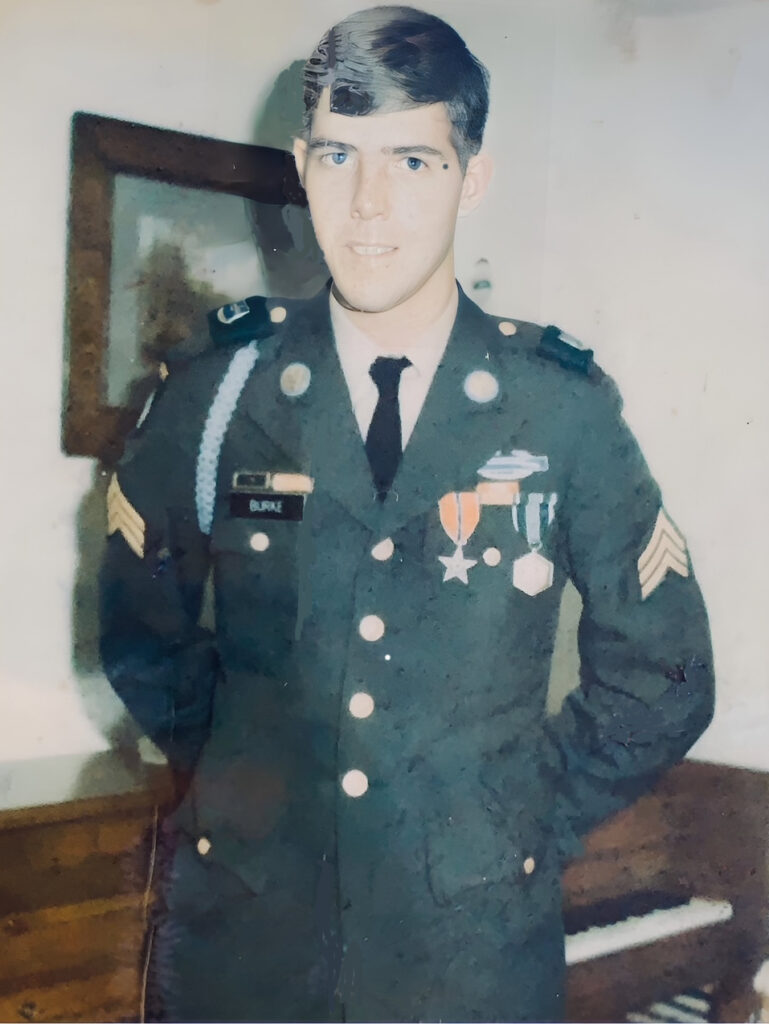
In 1967, as the Vietnam conflict intensified, three friends from Immaculate High School chose to serve. Bob joined the Marines, Greg entered ROTC, and I enlisted in the Army. Like many young men of our time, we believed service mattered.
After training at Fort Knox and Tigerland, I arrived in Vietnam during the Tet Offensive. We landed at Tan Son Nhut Air Base under darkness and rocket fire. I was assigned to the 101st Airborne near Hue, where Echo Company became my home for the next year.
Combat was intense. The most difficult moment came in a letter from my father telling me that my friend Bob had been killed just miles away.
In February 1969, I returned home.
Those months permanently shaped my understanding of discipline, endurance, and human vulnerability. Years later, those lessons would guide my work with individuals facing a different battle — the struggle to communicate.
From War to Words (1969–1981)
After returning home, I enrolled at Fordham University and graduated cum laude with degrees in English and Philosophy. I approached my education with urgency and gratitude.
My early career began in computer programming at Prudential. But volunteer work with individuals with disabilities redirected my path. I left programming to work in pioneering group homes in New Jersey, where I discovered my life’s calling.
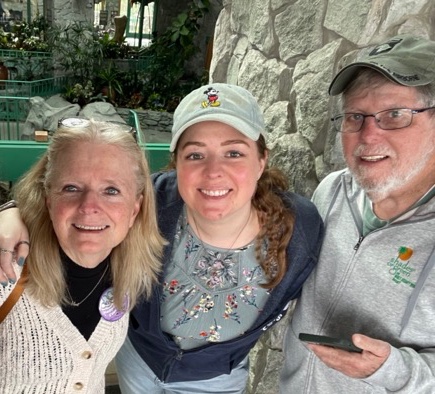
It was during this time that I met Mary — the love of my life and my wife of 47 years. Her steady partnership has anchored every chapter since.
Drawn by philosophy’s questions about knowledge and meaning, and by a growing commitment to communication, I pursued a Master’s degree in Communication Science at Montclair State College, graduating in 1981 and beginning my career as a speech-language pathologist.
Clinical Practice Across the Lifespan (1981–2008)
I began at Christ Hospital Home Health in Jersey City, treating stroke survivors, children with developmental delays, individuals with multiple sclerosis, and patients recovering from head trauma.
Jersey City’s cultural diversity deepened my perspective. Communication is never merely technical; it is cultural, emotional, and deeply personal.
At Welkind Rehabilitation Hospital in Chester, I worked within a true interdisciplinary team alongside physicians, physical and occupational therapists, psychologists, and social workers. There, I strengthened my expertise in stroke, traumatic brain injury, neurodegenerative disease, and complex medical conditions.
One day I treated a 6-month-old infant with swallowing difficulties and later that afternoon a 95-year-old stroke survivor. Speech-language pathology spans a lifetime — and so did my work.
Innovation and Assistive Technology
My background in programming led to a pivotal opportunity: I became Director of New Jersey’s first Computer Assisted Rehabilitation Department.
We adapted early computer systems for therapy, developed touchpad communication programs, and collaborated with organizations such as United Cerebral Palsy and Bell Labs. Long before assistive technology became common, we were exploring how technology could restore independence and voice.
This work shaped my enduring commitment to augmentative and alternative communication.
Early Intervention and the Power of First Words
In 2002, I joined Sunny Days Early Intervention, focusing on young children with autism spectrum disorder, Down syndrome, articulation disorders, and language delays.
Early intervention was profoundly meaningful work. With structured support and family involvement, young children can make remarkable gains. Helping a toddler say a first word carries the same significance as helping an adult regain speech after stroke.
Both restore connection.
The Beginning of SpeechTherapy.org
In 1996, while waiting in a computer store, I overheard someone purchasing “domain names.” Curious, I asked what that meant. That simple question led to the purchase of SpeechTherapy.org.
What began as curiosity became a digital extension of my professional mission: to provide clear, compassionate, experience-based guidance to families and adults navigating communication disorders.
A Final Reflection
Across decades of practice — from infants to nonagenarians — one truth remains constant:
Every person deserves to be understood.
SpeechTherapy.org reflects that conviction. Whether you are concerned about a child’s first words, recovering from stroke, or navigating a progressive neurological condition, I hope this site offers clarity, reassurance, and direction.
Communication is worth fighting for.
It has been the work of my lifetime.